
Operation Sindoor: India’s Precision Strikes Escalate Tensions with
Introduction
In the early hours of May 7, 2025, India initiated “Operation Sindoor,” a series of precision missile strikes targeting alleged terrorist infrastructures in Pakistan and Pakistan-administered Kashmir. This operation was a direct response to the April 22 terrorist attack in Pahalgam, Jammu and Kashmir, which resulted in the deaths of 26 civilians, predominantly Hindu pilgrims. The Indian government attributed the attack to Pakistan-based militant groups, prompting a decisive military response.
Genesis of Operation Sindoor
The Pahalgam attack, marked by its brutality and the targeting of civilians, sent shockwaves across India. Public outcry and demands for justice led the Indian government to plan a strategic response. Prime Minister Narendra Modi, emphasizing the need for a measured yet firm action, approved Operation Sindoor. The operation’s name, “Sindoor,” holds deep cultural significance in India, symbolizing marital commitment and protection, reflecting the nation’s resolve to safeguard its citizens.
Execution of the Operation
Operation Sindoor was a meticulously planned joint endeavor involving the Indian Army, Navy, and Air Force—the first such tri-service operation since the 1971 Indo-Pak war. At approximately 3:30 AM IST, Indian forces executed 24 precision missile strikes on nine identified terrorist targets. These included locations in Bahawalpur, Muridke, Sialkot, Muzaffarabad, and Kotli, known strongholds of groups like Jaish-e-Mohammed (JeM), Lashkar-e-Taiba (LeT), and Hizbul Mujahideen.
The Indian Air Force deployed Rafale jets equipped with SCALP missiles and AASM Hammer bombs, ensuring high-precision targeting. The operation lasted approximately 23 minutes, with Indian officials reporting the elimination of over 70 militants and the destruction of key terrorist infrastructure. Importantly, Indian authorities emphasized that the strikes were confined to non-military targets, aiming to minimize collateral damage.
Immediate Aftermath and Casualties
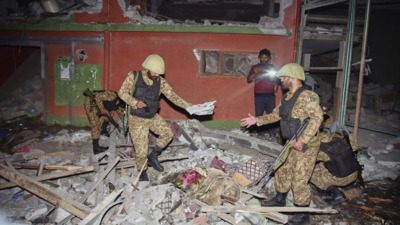
Pakistan reported significant civilian casualties, including the deaths of at least 26 individuals and injuries to over 46 others. One of the missiles reportedly struck a mosque in Bahawalpur, leading to widespread condemnation within Pakistan. In retaliation, Pakistani forces claimed to have shot down several Indian aircraft, including Rafale jets, and initiated artillery shelling across the Line of Control (LoC), resulting in the deaths of three Indian civilians.
The Indian government refuted claims of aircraft losses, asserting that all deployed assets returned safely. However, independent verification remains pending. The exchange of fire along the LoC has intensified, raising concerns of a broader military escalation.
Domestic and International Reactions
Within India, Operation Sindoor garnered widespread support across the political spectrum. Defense Minister Rajnath Singh lauded the armed forces, stating, “Bharat Mata ki Jai,” reflecting national pride in the military’s precision and restraint. Public sentiment echoed this sentiment, with many viewing the operation as a justified response to terrorism.
Conversely, Pakistan’s Prime Minister Shehbaz Sharif condemned the strikes as an “act of war,” vowing a robust response. The Pakistani government accused India of targeting civilian areas, a claim India vehemently denies.
Internationally, the United Nations and countries like the United States and China expressed deep concern over the escalating tensions. UN Secretary-General António Guterres urged both nations to exercise maximum restraint to prevent further deterioration of regional stability.
Strategic Implications
Operation Sindoor marks a significant shift in India’s counter-terrorism strategy, showcasing a willingness to conduct deep strikes within Pakistani territory. The use of advanced weaponry and precise targeting underscores India’s enhanced military capabilities and intelligence coordination.
This operation also signals a departure from previous engagements, such as the 2019 Balakot airstrikes, by involving all three branches of the military in a synchronized offensive. Analysts suggest that this could set a new precedent for India’s response to cross-border terrorism.
Looking Ahead
The situation remains volatile, with both nations on high alert. Diplomatic channels are under strain, and the risk of further military confrontation looms large. The international community’s role in mediating and de-escalating tensions will be crucial in the coming days.
As the region watches closely, the hope remains that dialogue and diplomacy will prevail over further conflict, ensuring peace and stability in South Asia.
About the Author