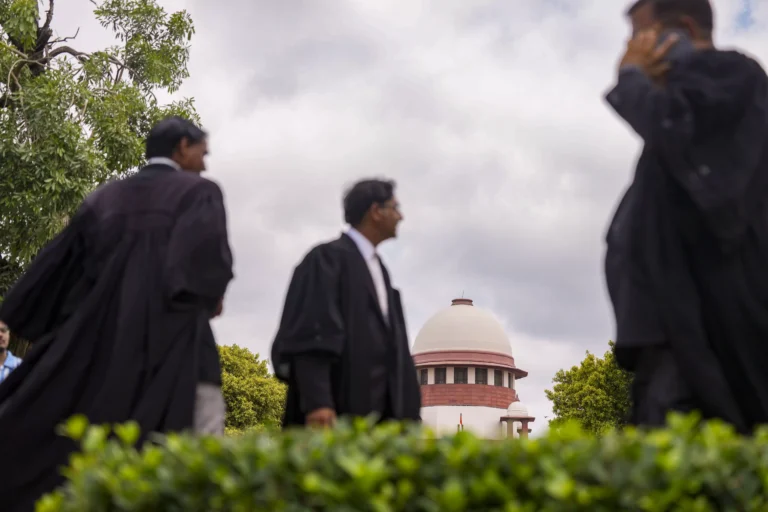
New Delhi, May 14, 2025 – Chief Justice of India Sanjiv Khanna retired today after a distinguished tenure at the helm of the Supreme Court. Justice B.R. Gavai was sworn in as the 52nd Chief Justice of India, succeeding Khanna.
During his farewell address, Justice Khanna made it clear that he would not accept any post-retirement assignments, a departure from the path taken by some of his predecessors who assumed roles in government or advisory positions. Instead, he stated that he would continue his engagement with the legal field, marking what he called his “third innings”.
A Legacy of Judicial Independence
Justice Khanna was appointed as CJI on November 11, 2024, and served for six months before demitting office today. His tenure was marked by decisive judicial action, particularly in cases concerning constitutional rights and judicial integrity.
One of the key moments of his tenure was his handling of the cash discovery controversy involving Justice Yashwant Verma. Justice Khanna initiated a preliminary inquiry, removed judicial work from Verma, and later recommended his transfer to the Allahabad High Court. When Verma refused to resign, Khanna escalated the matter to President Droupadi Murmu and Prime Minister Narendra Modi.
Commitment to Judicial Ethics
Justice Khanna’s decision to decline post-retirement roles has been widely praised by legal experts as a step toward reinforcing judicial independence. Many former Supreme Court judges have taken up government positions, raising concerns about potential conflicts of interest. Khanna’s stance echoes the legacy of his uncle, Justice H.R. Khanna, who famously dissented during the Emergency in the ADM Jabalpur case and was denied the position of CJI in 1977.
During his farewell speech, Justice Khanna emphasized that public trust in the judiciary must be earned, not commanded. He reminded the legal fraternity that lawyers are the conscience keepers of the institution and play a crucial role in upholding judicial integrity.
Transition to Justice B.R. Gavai
Justice B.R. Gavai, who was elevated to the Supreme Court alongside Khanna in 2019, took the oath as the new Chief Justice of India today. He has also publicly stated that he will not accept any post-retirement government role, signaling a possible shift in the judiciary’s approach to post-retirement appointments.
Justice Gavai praised Khanna’s tenure, stating that he had upheld fundamental rights and the basic structure doctrine with clarity and sensitivity. He described Khanna as a “gentleman to the core”, acknowledging his contributions to judicial ethics and constitutional law.
Looking Ahead
As Justice Khanna steps away from the Supreme Court, he has hinted at continuing his work in the legal field, possibly in arbitration or legal education. His departure marks the end of an era, but his commitment to judicial independence and ethical governance will continue to shape the legal landscape in India.
With Justice Gavai now leading the Supreme Court, the judiciary faces new challenges, including pending cases on constitutional amendments, civil liberties, and judicial reforms. His tenure will be closely watched as India navigates complex legal and political issues in the coming years.
Justice Khanna’s retirement is not just the conclusion of a judicial career—it is the beginning of a new chapter in India’s legal history.
About the Author