
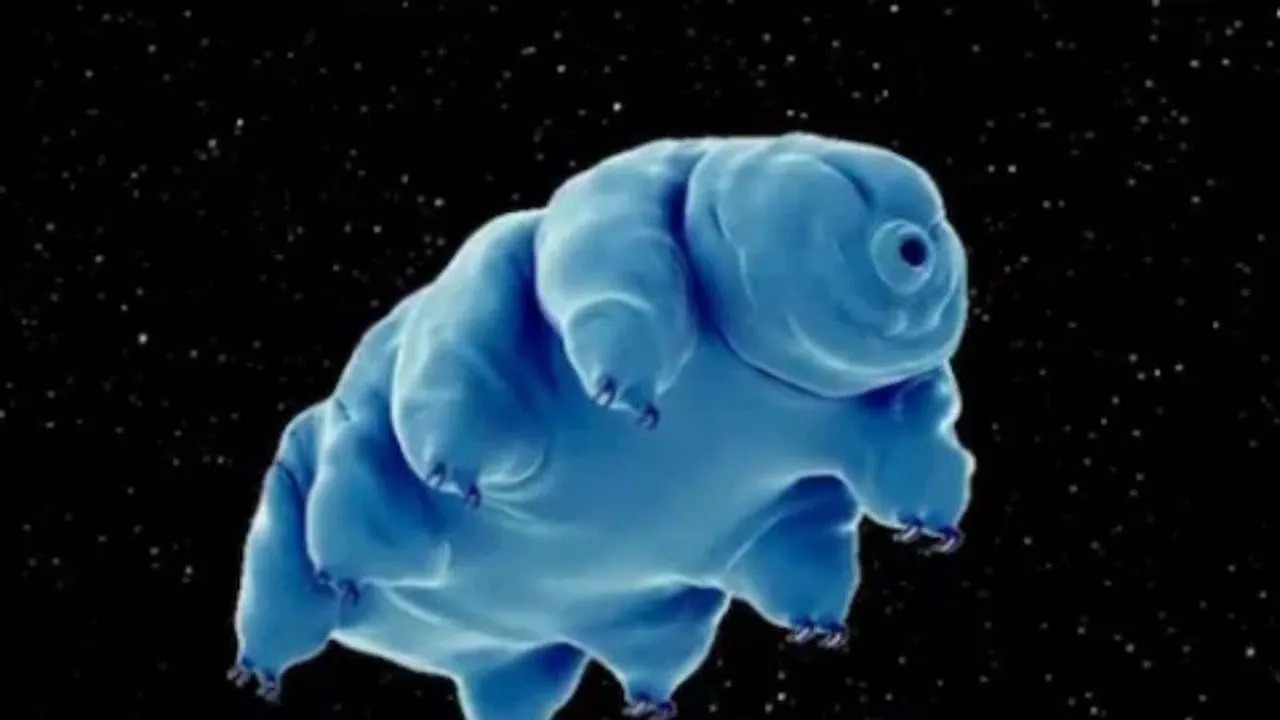
This creature can thrive in the most extreme conditions. It can comfortably survive temperatures ranging from -272°C to 150°C. Moreover, it can withstand high levels of radiation and the intense pressure of deep ocean depths. Scientifically proven, these creatures can even survive in outer space. In 2007, an experiment conducted by the European Space Agency confirmed this remarkable ability.
Tardigrades enter a unique state called “cryptobiosis,” where they expel nearly all the water from their bodies and enter a form of “suspended animation,” according to scientists. In this state, they can survive for decades without food, water, or oxygen. When favorable conditions return, they revive and resume normal activity.
Where Are They Found?
These microscopic creatures are found worldwide—from the peaks of the Himalayas to the depths of the oceans, from forest leaves to the ice of Antarctica. They can only be observed through a microscope and have a plump, eight-legged appearance that allows them to move.
In Cancer Treatment
The extraordinary abilities of tardigrades are paving the way for new discoveries in medicine, space research, and biology. Researchers believe their DNA repair mechanisms could aid in cancer treatment.
WordPress Tags: tardigrade, cryptobiosis, extreme conditions, space survival, European Space Agency, suspended animation, microscopic creatures, Himalayas, Antarctica, DNA repair, cancer treatment, space research, biology, resilient organism
About the Author